The Specific Day Most 30-Day Fitness Challenges Actually Get Abandoned (And Why That Day)
Fitness challenge dropout isn’t randomly distributed across the full 30 days — it clusters heavily around one specific, identifiable point, and knowing exactly when it hits and why makes it dramatically easier to plan around. Here is why that particular day sees the highest abandonment rate and the specific plan for getting through it.

Why Dropout Clusters Around This Specific Point
The convergence of factors: the the-initial-novelty-motivation-has-fully-worn-off-by-this-point (the first-week enthusiasm and novelty, which reliably carries most people through the earliest days regardless of actual difficulty, having fully faded by this point while a durable habit hasn’t yet formed to replace it — the the-motivation-that-started-you-has-run-out-before-a-real-habit-has-taken-over), the the-visible-early-progress-has-plateaued-or-isnt-visible-yet (the rapid, visible early changes — water weight, initial strength gains, the satisfaction of simply starting — leveling off right around this point, before slower, more durable progress becomes visible enough to notice, echoing the barre-plateau-how-to-keep-progressing-guide timing logic — the the-easy-visible-wins-are-gone-and-the-real-wins-arent-visible-yet), the the-life-disruptions-statistically-have-had-time-to-accumulate (the roughly two-week mark being enough elapsed time for at least one schedule disruption, illness, or unexpected obligation to have occurred and interrupted the streak, per the why-30-day-challenges-fail-week-two-guide logic — the enough-time-has-passed-for-real-life-to-have-intervened-at-least-once), the the-a-missed-day-here-carries-more-psychological-weight-than-it-would-later (the a broken streak at this relatively early point feeling more like a referendum on the whole challenge’s viability than a similar miss would feel deeper into the program, when more invested effort creates more sunk-cost motivation to continue — the a-miss-early-threatens-the-whole-challenge-more-than-a-miss-later-does), the the-the-remaining-distance-still-looks-long-from-this-vantage-point (the roughly two-thirds of the challenge still remaining at this point, a long enough remaining distance to feel genuinely daunting rather than a short final stretch — the the-remaining-distance-still-feels-long-not-almost-done), and the reframe (the dropout clustering at this specific point as a predictable convergence of faded novelty, an invisible-progress gap, statistically likely life disruption, and a still-long remaining distance — not a personal willpower failure specific to the people who quit there).

What Happens to People Who Push Through That Specific Day Anyway
The payoff on the other side: the the-difficulty-genuinely-eases-within-a-few-more-days-for-most-people (the well-documented pattern of the dip being temporary, with motivation and perceived difficulty typically improving again within a handful of days once the low point passes, per the finish-a-30-day-fitness-challenge logic — the the-hardest-point-is-also-usually-the-shortest-lived-one), the the-a-second-wave-of-visible-progress-often-arrives-shortly-after (the slower, more durable changes that were invisible right at the dip frequently becoming noticeable again within the following week, restoring some of the motivation the early rapid changes provided — the the-progress-gap-that-caused-the-dip-is-usually-temporary-not-permanent), the the-getting-through-it-once-changes-how-the-next-attempt-feels (the people who’ve successfully pushed through this specific point before generally reporting less dread approaching it on a future challenge, since it’s no longer an unknown — the experience-with-the-dip-reduces-its-power-the-next-time-around), the the-the-people-who-finish-report-this-exact-stretch-as-the-hardest-part-not-the-whole-challenge (the retrospective accounts from people who complete 30-day challenges consistently identifying this specific window as the hardest part, not the challenge as a whole, reinforcing that it’s a localized obstacle rather than a sign the entire effort was too much — the its-a-specific-hard-stretch-not-evidence-the-whole-challenge-was-unrealistic), and the frame (the payoff as difficulty genuinely easing within days, a second wave of visible progress typically following shortly after, and the dip losing much of its power on repeat attempts — real, documented reasons to treat this specific day as a hurdle to clear rather than a signal to stop).
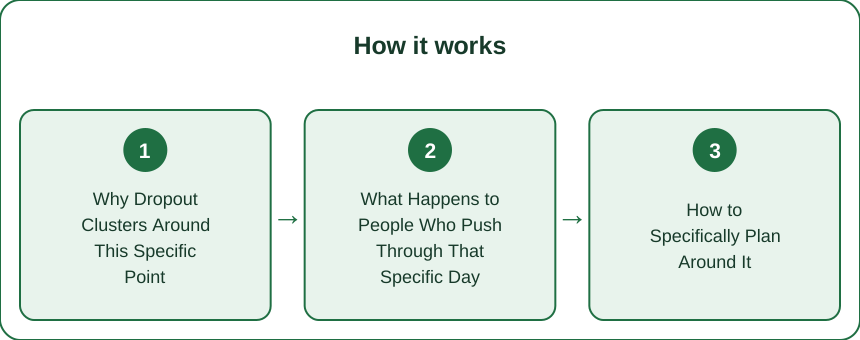
How to Specifically Plan Around It
The targeted strategy: the mark-this-specific-day-on-the-calendar-in-advance-as-a-known-danger-point (the identifying and marking this exact point at the very start of the challenge, treating it as a known, expected obstacle to prepare for rather than a surprise setback if and when it hits — the naming-the-danger-point-in-advance-changes-how-it-feels-when-it-arrives), the the-plan-a-specific-small-reward-or-check-in-right-around-this-day (the scheduling something specifically motivating — a small reward, a check-in with an accountability partner, a planned easier or more enjoyable session — right at this predictable low point rather than leaving it unplanned — the a-planned-boost-at-the-known-low-point-counters-the-predictable-dip), the the-lower-the-bar-for-that-specific-week-rather-than-pushing-through-at-full-intensity (the deliberately easing intensity or expectations specifically during this predictable dip week, protecting the streak itself over protecting peak performance during exactly the week it’s hardest to sustain either — the ease-intensity-not-standards-during-the-predictable-dip-week), the the-track-a-non-visible-progress-marker-specifically-through-this-period (the deliberately measuring something beyond visible physical change — consistency count, energy levels, sleep quality — specifically through this stretch when visible progress alone won’t be enough motivation — the track-something-that-isnt-waiting-on-visible-change-during-this-window), the the-pre-decide-the-response-to-a-missed-day-before-it-happens (the deciding in advance exactly what happens if a day gets missed around this point — resume the next day, no big analysis — removing the in-the-moment decision paralysis that a missed day at this fragile point tends to trigger, per the finish-a-30-day-fitness-challenge logic — the a-pre-decided-response-to-a-miss-prevents-it-from-becoming-a-full-stop), and the frame (the specific plan as marking the danger point in advance, scheduling a planned boost right at it, easing intensity rather than standards during that week specifically, tracking non-visible progress markers through the dip, and pre-deciding the response to any missed day — turning a predictable, well-documented dropout point into a planned-for speed bump rather than an actual stopping point).
Dropout from 30-day fitness challenges clusters heavily around a specific, identifiable point rather than spreading evenly across the month, driven by a predictable convergence of factors — the initial novelty and enthusiasm that carried the first week has fully worn off before a durable habit has replaced it, the rapid visible early wins have plateaued while slower real progress isn’t visible yet, enough time has statistically passed for at least one real-life disruption to have hit the streak, and the roughly two-thirds of the challenge still remaining feels genuinely long rather than a short final stretch. Planning around it starts with marking that specific point on the calendar in advance as a known, expected obstacle rather than a surprise, scheduling a specific small reward or accountability check-in right at that predictable low point, deliberately easing intensity rather than standards during that particular week to protect the streak over peak performance, tracking a non-visible progress marker like consistency or energy through the dip since visible change alone won’t carry enough motivation, and pre-deciding exactly how to respond to any missed day before it happens so a slip doesn’t spiral into abandoning the whole challenge.
Keep Reading
This article is for general informational and styling purposes only. Fit, sizing, and product availability may vary.