Why So Many 30-Day Fitness Challenges Fall Apart Right Around Day 10
A 30-day fitness challenge rarely fades out gradually, it tends to collapse abruptly around the same point, day 10, and that consistency across so many different challenges and people points to a predictable, structural cause rather than a simple lack of willpower.

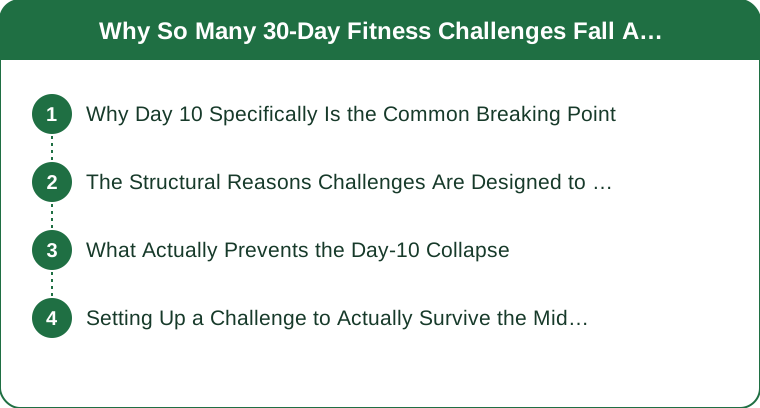
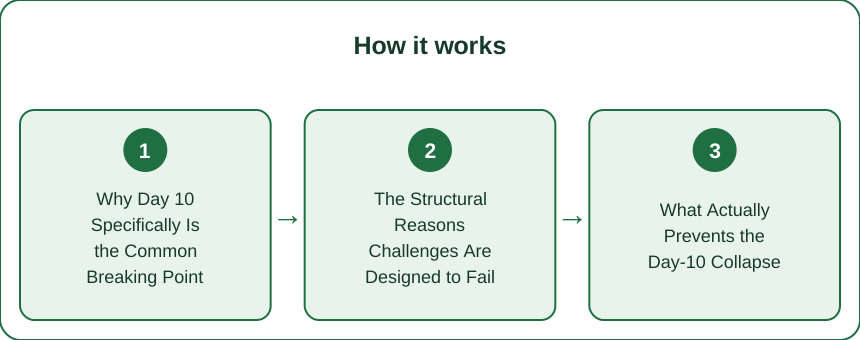
Why Day 10 Specifically Is the Common Breaking Point
The pattern: the the-initial-motivation-decay-curve (initial motivation and novelty, which carry most people through the first week or so, following a predictable decay curve that tends to bottom out right around the ten-day mark), the the-initial-soreness-and-adaptation-window (the first week to ten days generally corresponding to the period of most significant muscle soreness and adaptation discomfort, which resolves right around the same point motivation starts dropping, creating a rough overlap), the the-novelty-wearing-off-before-habit-forms (ten days being long enough for the initial novelty and excitement of starting something new to fade, but not yet long enough for the routine to have become an actual automatic habit, leaving a specific motivational gap)).
The Structural Reasons Challenges Are Designed to Fail Here
The design flaws: the the-flat-intensity-throughout-the-month (most 30-day challenges keeping the exact same daily task and intensity level throughout, offering no built-in progression or variation to sustain interest once the initial novelty fades), the the-no-built-in-rest-or-flexibility (rigid daily challenges rarely including planned rest days or flexibility for a bad day, meaning a single missed day, which is statistically likely to happen, can feel like a complete failure of the whole challenge rather than a normal, absorbed setback), the the-all-or-nothing-framing (challenges typically framed in strict all-or-nothing terms, thirty consecutive days or restart from zero, which makes an inevitable disruption feel like total failure rather than a manageable bump).

What Actually Prevents the Day-10 Collapse
The structural fixes: the the-built-in-progression-across-the-month (choosing or designing a challenge with genuine progression, increasing difficulty gradually across the thirty days, so the middle stretch doesn’t feel identical to day one), the the-planned-flexibility-days (building in a small number of planned flexible or lighter days in advance, so an inevitable off day doesn’t feel like breaking the challenge’s core rule), the the-reframing-a-missed-day-as-data (treating a missed day as information about scheduling or intensity rather than a personal failure, and simply resuming the next day rather than restarting from zero).
Setting Up a Challenge to Actually Survive the Middle Stretch
The practical setup: the the-tracking-mood-and-soreness-not-just-completion (tracking mood and physical soreness alongside simple completion, since the day-10 window is specifically when both tend to dip, making early awareness useful for adjusting rather than quitting), the the-social-accountability-timed-to-the-risk-window (arranging a check-in or accountability partner specifically timed around days seven through twelve, the highest-risk window, rather than only at the challenge’s start), the the-choosing-a-challenge-with-genuine-personal-interest (choosing a challenge built around an activity with genuine personal interest rather than one chosen purely for its difficulty or popularity, since interest is what has to carry the middle stretch once novelty fades), and the frame (30-day challenges tend to collapse specifically around day 10 because of a genuine overlap between fading novelty, peak muscle soreness, and a lack of built-in progression or flexibility — a challenge with real progression, planned flexible days, and accountability timed to that specific window is considerably more likely to actually get finished.)
A 30-day fitness challenge rarely fades out gradually, it tends to collapse abruptly around day 10 specifically, a consistency across so many different challenges and people that points to a predictable structural cause rather than a simple lack of willpower. Initial motivation and novelty, which carry most people through the first week, follow a decay curve that tends to bottom out right around that same point, overlapping almost exactly with the window of peak muscle soreness and adaptation discomfort, and landing at a moment when the initial novelty has faded but the routine hasn’t yet become an actual automatic habit. Most challenges make this worse by design, keeping the exact same daily task and intensity flat throughout the month with no built-in progression, rarely including planned rest days or flexibility, and framing the whole thing in strict all-or-nothing terms where a single missed day, which is statistically likely to happen at some point, can feel like total failure rather than a normal, absorbed setback. A challenge structured with genuine progression across the thirty days, a small number of planned flexible or lighter days built in from the start, and accountability specifically timed around days seven through twelve rather than only at the beginning, along with treating any missed day as scheduling information rather than personal failure, is considerably more likely to actually survive its own middle stretch.
Keep Reading
This article is for general informational and styling purposes only. Fit, sizing, and product availability may vary.