The 14-Day Hydration Challenge: Gamifying Your Way Out of Chronic Dehydration
Quick Answer: The 14-day hydration challenge builds one habit at a time — a wake-up glass, then meal-time glasses, then a marked bottle with a 3pm deadline, then a sugary-drink swap — so by day 14 you’re drinking consistently more water without ever having to rely on willpower alone. Track it daily and let the game do the work.
Everyone knows they should drink more water. Almost nobody changed their life by simply knowing that. You’ve heard the advice a hundred times, nodded, and then gone right back to remembering you’re thirsty around 2pm, three hours after your energy already tanked. This is where the challenge format earns its keep: 14 days, a short list of escalating rules, and a tracker with boxes to check. It’s transparently a game — and your afternoon energy doesn’t care why it suddenly got better.
How does the 14-day hydration challenge work?
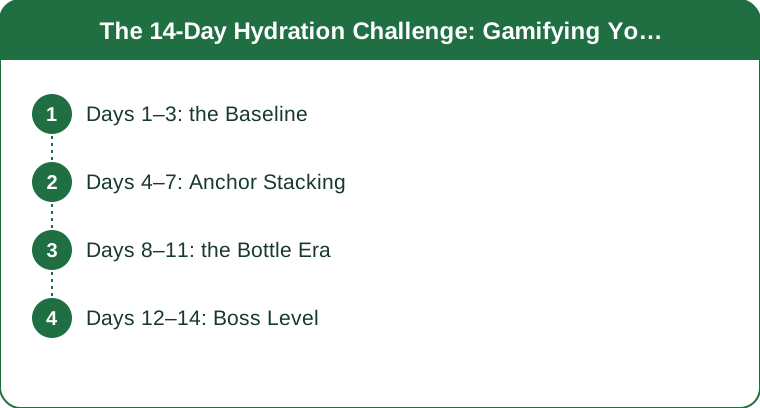
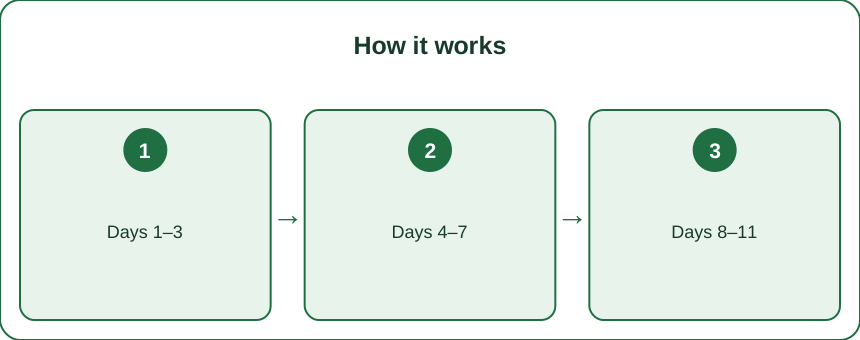
The challenge is built in four stages, each one stacking on top of the last so you’re never trying to overhaul your whole day at once. That’s the actual trick: one small rule added every few days, not a total lifestyle reset on day one.
- Days 1–3: one glass of water first thing, before coffee.
- Days 4–7: add a glass before each meal.
- Days 8–11: introduce a marked bottle with a 3pm deadline.
- Days 12–14: add one sugary-drink swap per day.
By the time you reach the final stage, the earlier habits have already become close to automatic, so the last rule feels like a small addition instead of a fourth new thing to remember.

What’s the first step — and why start with just one glass?
Days 1 through 3 have exactly one rule: a full glass of water immediately upon waking, before coffee touches your lips. That’s it. Track it in whatever way you like — an app, a sticky note, a tally on the fridge.
This single glass does two jobs. First, it undoes some of the mild overnight dehydration that happens naturally over six to eight hours without fluids. Second, and more importantly, it builds the challenge’s keystone habit — the one small win that makes you more likely to follow through on everything after it. Starting small isn’t a compromise here; it’s the actual strategy.
How do you add hydration habits without relying on willpower?
Days 4 through 7 bring the anchor-stacking phase: one glass of water before each meal, on top of the wake-up glass. The reason this works better than “just drink more water” as a vague goal is that it rides on habits you already have. You already eat meals at roughly predictable times — hydration just tags along.
There’s a nice side effect here too: a glass of water before eating tends to take the edge off between-meal snack attacks, since thirst and hunger signals get crossed pretty easily in the brain. You may find you naturally reach for fewer snacks in the late afternoon.

What’s the “bottle era” and “boss level” stages about?
Days 8 through 11 introduce a marked bottle — either one bought with volume lines printed on it, or a DIY version made with masking tape marking your own goals. The rule: finish it by 3pm, then refill for the evening. On especially hot summer days, add one bonus line to account for extra fluid loss.
Days 12 through 14 are the “boss level” — all previous rules stay active, plus a new one: swap one habitual sugary drink per day for water instead. This is deliberately saved for last, once the water habit is already established, because it’s easier to replace a drink you’re used to when water already feels like a normal part of your routine rather than a chore you’re adding cold.
The unofficial graduation exam: consistently pale-straw-colored urine (a widely used, simple hydration marker) and a 3pm that no longer sends you hunting for an emergency snack.
Myth vs Fact: Hydration Challenges
Myth: You need to drink a specific number of ounces to “win.” Fact: This challenge is built around habits and timing, not a rigid ounce target — everyone’s needs vary by body size, climate, and activity level.
Myth: More water is always better, no matter how much you drink. Fact: There’s a real ceiling — drinking excessive amounts in a short period can be genuinely harmful. If you have a kidney condition, heart condition, or take medication that affects fluid balance, check with a doctor before ramping up intake significantly.
Myth: Sugary drinks are the biggest hydration problem, so cut them first. Fact: The challenge deliberately saves that swap for the last stage, once the water habit is solid — trying to kill a habit before building the replacement usually backfires.
FAQ
Do I need a special bottle for this challenge?
No — a plain bottle with masking-tape lines works exactly as well as a bottle with printed markings. The point is a visual, trackable goal, not a specific product.
What if I miss a day or two during the challenge?
Just pick back up where you left off rather than restarting from day one. The habits build cumulatively, so a missed day doesn’t erase the progress from the days before it.
How do I know if I’m actually drinking enough water?
Pale-straw-colored urine is a simple, widely used everyday indicator of decent hydration; darker urine generally suggests you need more fluids. If you have ongoing concerns about hydration or a medical condition affecting fluid intake, it’s worth checking with a doctor rather than relying on self-tracking alone.
TL;DR
- The challenge stacks four small habits over 14 days: wake-up glass, meal-time glasses, a marked bottle with a 3pm deadline, and a sugary-drink swap.
- Each stage builds on the last, so nothing feels like a sudden overhaul.
- Pre-meal water may reduce snacking by easing hunger-thirst confusion.
- Pale-straw urine and steadier 3pm energy are simple signs the challenge is working.
- Missed a day? Just resume — the habits are cumulative, not all-or-nothing.
Keep Reading
This article is for general informational and styling purposes only. Fit, sizing, and product availability may vary.