You Finished Your 30-Day Challenge. Now What? (Most People Get This Part Wrong)
Quick Answer: Don’t start a brand-new challenge immediately — instead, pick your favorite 2-3 exercises from the last 30 days and build them into a simple, no-end-date routine, because challenges without a next step lose about 80% of participants within 2 weeks of finishing.
You did it. 30 days, no zeros. And now there’s a very real chance you do… nothing tomorrow, because the calendar that kept you accountable just ran out of squares.

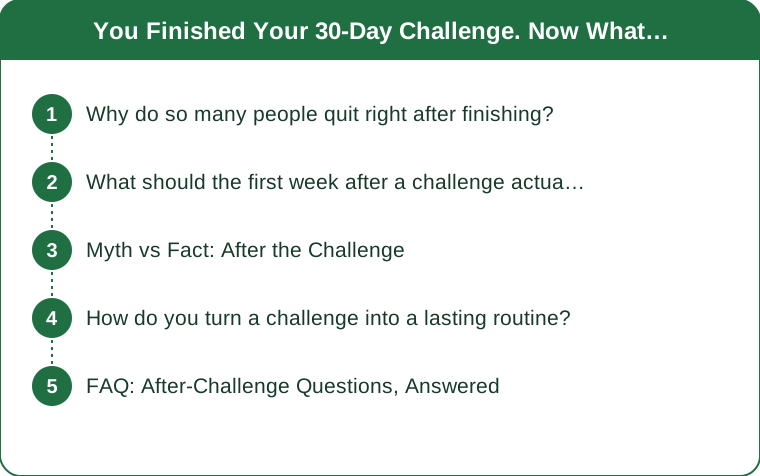
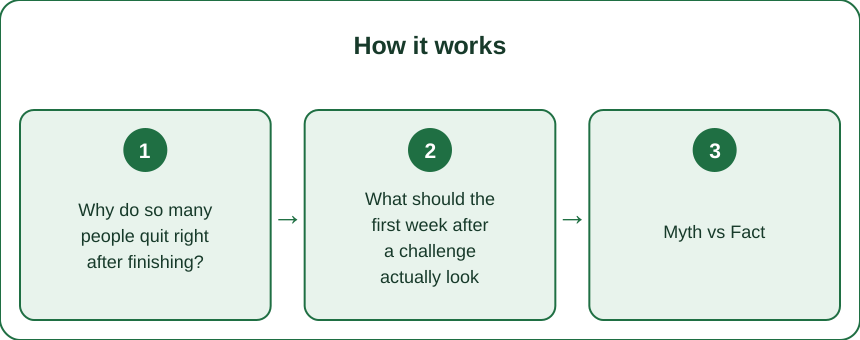
Why do so many people quit right after finishing?
Because a challenge’s structure — the calendar, the daily checkbox, the finish line — was doing the motivational work for you. When the structure disappears on day 31, so does the automatic decision to move.
This isn’t a willpower failure. It’s a design gap: challenges are built to start habits, not sustain them, and most people never build the bridge to what comes next.
What should the first week after a challenge actually look like?
Don’t rest completely, and don’t jump to a harder new challenge. Instead:
- Pick your top 2-3 favorite moves from the last 30 days
- Do them 3x this week, no calendar, no pressure — just showing up
- Skip adding anything new for at least 7 days
This keeps the habit alive at a lower-effort version while your motivation resets.

Myth vs Fact: After the Challenge
Myth: You need a new challenge immediately to keep momentum. Fact: Back-to-back challenges are how burnout starts. A week of low-key maintenance protects the gains you just built.
Myth: If you miss a day after finishing, the challenge ‘didn’t work.’ Fact: The challenge worked if it built the habit loop — one missed day post-challenge is normal life, not failure.
Myth: Progress only counts if you can see visible change. Fact: Most physiological adaptation from a 30-day program (better movement quality, more consistent energy) shows up in how you feel and move, not the mirror.
How do you turn a challenge into a lasting routine?
Around day 35-40, once the low-key maintenance week feels automatic, add one new element at a time — a slightly heavier weight, one new exercise, or one extra day per week. Adding everything at once recreates the same burnout risk a new challenge would.
Track a simple weekly number (workouts completed, not perfection) instead of daily streaks — streaks are fragile; weekly totals are forgiving.
FAQ: After-Challenge Questions, Answered
Should I take a full rest week after finishing?
A lighter week, not a full rest week, keeps the habit alive — total rest makes day 1 of anything new feel like starting over.
How long until I lose the fitness I gained?
Meaningful loss generally takes 2-3+ weeks of near-total inactivity — a few lower-key days won’t erase a 30-day effort.
Is it bad to repeat the same challenge again later?
Not at all — repeating a challenge 2-3 months later, once you’ve plateaued on the maintenance version, is a legitimate way to progress.
TL;DR:
- Don’t start a new challenge immediately — that’s when most people quit for good
- Keep your top 2-3 moves going at low effort for one week first
- Add progression one piece at a time starting around day 35-40
- Track weekly totals, not daily streaks — streaks break, weekly habits bend
The challenge got you moving. What you build in the week right after decides if it sticks.
Keep Reading
This article is for general informational and styling purposes only. Fit, sizing, and product availability may vary.