What Is Actually Happening in Your Body During a 30-Day Fitness Challenge, Week by Week
Quick Answer: A 30-day fitness challenge produces real, sequenced physiological changes — neuromuscular adaptation in week one, early strength and endurance gains in weeks two to three, and habit-level neurological changes by week four — which is why the challenge tends to feel dramatically different at each stage, not just harder or easier based on motivation alone.
The challenge feels almost mechanically different by week — hard in a new way in week one, a strange plateau in week two, then a shift that feels different again by week four. That’s not just your motivation changing. It’s your body genuinely adapting on a specific, sequenced timeline.

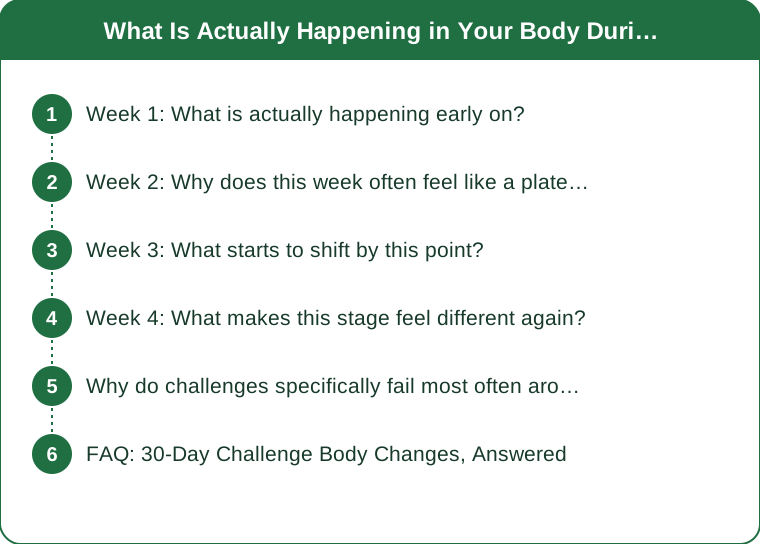
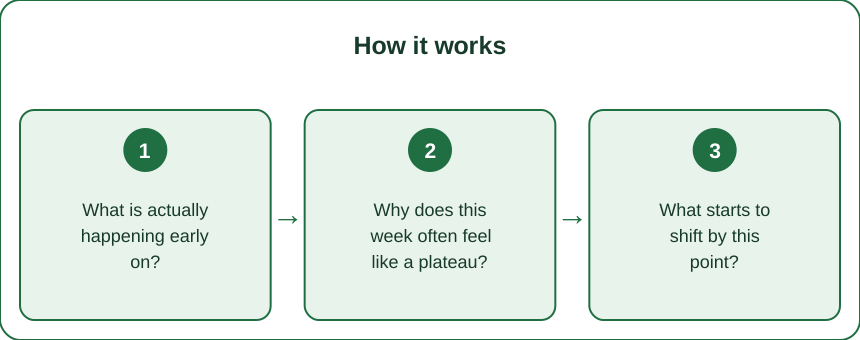
Week 1: What is actually happening early on?
Most of week one’s rapid-feeling ‘progress’ is neuromuscular adaptation, not muscle growth — your nervous system is getting more efficient at recruiting the muscle fibers you already have, which is why early strength gains happen faster than actual tissue changes could explain.
Week 2: Why does this week often feel like a plateau?
Neuromuscular gains from week one start to level off while true muscular or cardiovascular adaptation hasn’t fully kicked in yet — this gap is a well-documented pattern and is a major reason people quit specifically around day 10-14, even though real underlying progress hasn’t actually stopped.
Week 3: What starts to shift by this point?
By week three, measurable cardiovascular and early muscular endurance improvements typically become noticeable, alongside continued neurological efficiency gains — this is often when the challenge starts to feel meaningfully easier at the same intensity, rather than just more tolerable.

Week 4: What makes this stage feel different again?
By around day 21-28, habit-level neurological changes — the routine requiring less conscious willpower to execute — start to take effect, alongside continued physical adaptation. This is closer to what’s often loosely called habit formation, and it’s part of why day 30 feels different from day 1 in a way that goes beyond just fitness.
Why do challenges specifically fail most often around day 10?
The neuromuscular-to-muscular adaptation gap described in week two lines up almost exactly with the most commonly reported quit point in 30-day challenge data — understanding that this is a temporary, well-documented dip (not a sign the challenge isn’t working) is one of the more useful things to know going in.
FAQ: 30-Day Challenge Body Changes, Answered
Is it normal for week 2 to feel harder than week 1?
Yes — this lines up with a known adaptation gap between fast neuromuscular gains and slower muscular/cardiovascular gains, and it typically resolves by week three.
Does everyone go through these stages on the same timeline?
The general sequence is well documented, but exact timing varies by starting fitness level and challenge intensity — the pattern holds even if your personal timeline shifts slightly.
What happens physiologically after day 30 if I stop?
Most early-stage neuromuscular and habit gains can fade within a few weeks without continued practice, which is part of why many people choose to roll directly into a second challenge or a maintenance routine.
TL;DR:
- Week 1 gains are mostly neuromuscular efficiency, not muscle growth
- Week 2’s plateau feeling reflects a real, documented gap between adaptation types
- Week 3 brings measurable cardiovascular and endurance improvements
- Week 4 adds habit-level neurological change on top of continued physical adaptation
Knowing this timeline in advance makes the week 2 dip easier to push through, since it’s a documented pattern, not a sign something’s wrong.
Keep Reading
This article is for general informational and styling purposes only. Fit, sizing, and product availability may vary.